
Adi Kumbeswarar Temple
Kumbakonam
Adi Kumbeswarar Temple is a renowned Shiva temple in Kumbakonam, Tamil Nadu. Known for its spiritual significance, magnificent architecture, and connection to the Mahamaham Festival, it remains one of South India’s most important pilgrimage destinations.
Specialities
Specialities ofAdi Kumbeswarar Temple
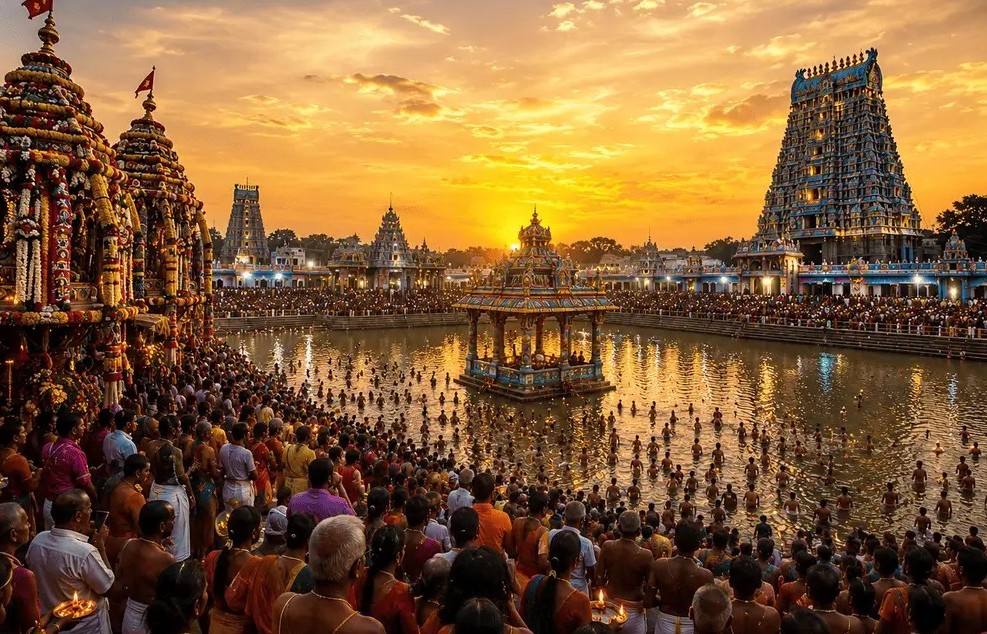
Adi Kumbeswarar Temple is not merely one among the thousands of Shiva temples in Tamil Nadu — it is a kshetram of extraordinary, layered and multidimensional spiritual significance. Every stone, every shrine, every ritual and every legend of this temple carries a depth of meaning that sets it apart as one of the most sacred and spiritually powerful temple complexes in all of South India.
1. Svayambhu Lingam — The Self-Manifested Divine
The most defining speciality of Adi Kumbeswarar Temple is that its presiding Shiva Lingam is a Svayambhu Lingam — not sculpted or installed by human hands but believed to have self-manifested from the earth itself when Lord Shiva broke open the Amrita Kumbha at this sacred spot. Svayambhu Lingams are extremely rare and are considered among the most powerful forms of Lord Shiva’s presence on earth — and the one at Adi Kumbeswarar Temple is one of the most celebrated in all of South India.
2. The Origin of an Entire City
Very few temples in the world can claim to be the reason an entire city exists. When Lord Shiva broke the Amrita Kumbha at this spot, a sacred kshetram was born — and around that kshetram the city of Kumbakonam grew. The very name Kumbakonam — derived from Kumbha (sacred pot) and Konam (the place where it rested) — is a permanent testimony to this extraordinary fact. To visit this temple is to stand at the very birthplace of one of Tamil Nadu’s most historic cities.
3. Paadal Petra Sthalams — Glorified by the Nayanmars
Adi Kumbeswarar Temple holds the distinction of being one of the 276 Paadal Petra Sthalams — the Shiva temples glorified in the sacred Thevaram hymns of the three principal Nayanmars — Thirugnana Sambandar, Thirunavukkarasar (Appar) and Sundarar. The same sacred Thevaram hymns composed by these saints over 1,300 years ago continue to be sung here every single day during the six daily pooja sessions — an unbroken living tradition of Tamil Shaivite devotion.
4. Mahamaham — The World’s Greatest Temple Festival
No other temple in Tamil Nadu can claim ownership of a festival as cosmically significant as Mahamaham — held once every 12 years when Jupiter enters Leo on the full moon of the Tamil month Masi. The last festival in 2016 saw over 30 lakh (3 million) pilgrims converge on Kumbakonam — one of the largest single-day religious gatherings on earth. A bath in the Mahamaham Tank on this day is believed to carry the merit of bathing in all the sacred rivers of India simultaneously.
5. 27 Nakshatras and 12 Rasis — Carved on a Single Stone
Among the most extraordinary sculptural achievements of this temple is a single stone on which all 27 Nakshatras (birth stars) and all 12 Rasis (zodiac signs) — a total of 39 distinct astronomical symbols — have been carved together with precision and artistry. This rare achievement — requiring both deep astronomical knowledge and extraordinary sculptural skill — is found in very few temples in Tamil Nadu and stands as a powerful testament to the integration of astronomy, astrology and art in the Tamil temple tradition.
6. Five Silver Chariots — A Royal Legacy
Adi Kumbeswarar Temple possesses five magnificent silver chariots — one of the largest collections of silver temple chariots held by any single temple in Tamil Nadu. Used during Brahmotsavam and major festivals, each chariot is a masterwork of traditional metalcraft adorned with intricate silver panels depicting divine Puranic scenes. The sight of a silver chariot being pulled through the ancient streets of Kumbakonam by thousands of devoted pilgrims — to the music of nadaswaram and mridangam — is one of the most spectacular sights in Tamil Nadu’s festival tradition.
7. Panchanada Kshetram — Five Sacred Rivers
Kumbakonam holds the unique distinction of being situated at the Panchanada Kshetram — the sacred confluence of five holy rivers — Kaveri, Kollidam, Arasalaru, Vettar and Kudamuruti. In Hindu tradition, the confluence of sacred rivers is one of the most spiritually powerful geographical phenomena. Adi Kumbeswarar Temple — situated at the heart of this Panchanada Kshetram — draws upon the combined spiritual power of five sacred rivers simultaneously — making it one of the most divinely charged sacred spots in all of South India.
8. The Birthplace of the Current Universe
The Sthala Puranam makes an extraordinary claim — that this temple marks the actual geographical location where the current cycle of creation began. When Lord Shiva released the contents of the Amrita Kumbha — containing the seeds of all living beings, all sacred knowledge and the essence of the four Vedas — into the earth at Kumbakonam, He set in motion the creation of the universe as we know it. This claim is supported by references in the Skanda Purana, Brahma Purana and Shiva Purana — elevating this temple to a status of cosmic importance that few sacred sites anywhere in the world can match.
9. 188+ Temples Within the Town
Kumbakonam is known across India as the “City of Temples” — with over 188 temples within the town limits alone. This extraordinary concentration of sacred sites in a single town is unique in Tamil Nadu and reflects the belief that the amrita released from the sacred pot sanctified every inch of this land. Adi Kumbeswarar Temple stands at the sacred center of this extraordinary temple landscape — the source from which all the other temples of Kumbakonam radiate like rays of divine light from a single luminous center.
10. Six Daily Poojas — Unbroken for Centuries
The ritual life of the temple is sustained by six elaborate daily pooja sessions — conducted from dawn to night without interruption every single day. These six poojas — Thiruvanandal (5:30 AM), Kalasandhi (8:00 AM), Uchikalam (12:00 PM), Sayarakshai (6:00 PM), Irandaam Kalam (7:30 PM) and Ardhajama Pooja (9:00 PM) — follow the precise ritual protocols of the ancient Agamic texts and have been performed without interruption for centuries — through all the political upheavals and historical changes of two thousand years.
11. Navagraha Temples — The Closest Concentration
Kumbakonam is the most convenient base for visiting the 9 Navagraha temples of the Kaveri delta — dedicated to the nine planetary deities and among the most important pilgrimage sites in Tamil Nadu for astrological remedies. All nine are within a 70 km radius of Kumbakonam — with the closest, Thirunageswaram (Rahu), just 6 km away and Suriyanar Koil (Sun) and Alangudi (Jupiter) within 22 km — making Adi Kumbeswarar Temple the natural starting point of any Navagraha pilgrimage.
12. UNESCO World Heritage Temples at the Doorstep
Adi Kumbeswarar Temple sits at the geographical heart of the Great Living Chola Temples region — a UNESCO World Heritage Site. The three Chola masterpieces — Brihadeeswarar Temple, Thanjavur (40 km), Airavatesvara Temple, Darasuram (4 km) and Gangaikonda Cholapuram Temple (35 km) — are all within easy reach. The Airavatesvara Temple at Darasuram — just 4 km away — can be visited in the same half-day, making Kumbakonam the ideal base for experiencing the full glory of Chola architectural heritage.
13. Goddess Mangalambikai — The Mangal Dosha Remedy Temple
Adi Kumbeswarar Temple is one of the most important temples in Tamil Nadu for devotees affected by Mangal Dosha — an astrological condition believed to create obstacles in marriage. Goddess Mangalambikai — whose very name contains “Mangala” — is believed to directly neutralize and remove Mangal Dosha from Her devotees’ birth charts. Thousands of unmarried devotees visit the temple — particularly on Fridays — to seek the goddess’s divine intervention and blessing for a happy and obstacle-free marriage.
14. A Temple That Connects All Traditions
While primarily a Shaivite kshetram, Adi Kumbeswarar Temple honors multiple devotional traditions within a single complex — with shrines to Lord Vishnu, Lord Rama, Lord Murugan, the 63 Nayanmars and the Sapta Kannikas. The presence of devotees from all backgrounds — Shaivite and Vaishnavite, learned and simple, from every corner of India — makes this temple a living symbol of the inclusive, all-embracing and universal nature of Tamil Hindu spirituality.
15. A Living Temple — 2,000 Years of Unbroken Worship
Perhaps the most profound speciality of all — Adi Kumbeswarar Temple is a living temple. Not a museum or monument but a fully functioning, actively worshipped sacred center in unbroken continuous worship for over 2,000 years. The same Thevaram hymns, the same abhishekam rituals, the same sacred lamp — lit and tended every single day without exception for two millennia. This living continuity of devotion — spanning dynasties, centuries and generations — is the greatest speciality and the greatest miracle of this extraordinary kshetram.
Conclusion
The specialities of Adi Kumbeswarar Temple are windows into a living spiritual universe of extraordinary depth, antiquity and power. From the cosmic significance of its Svayambhu Lingam to the world-record gathering of Mahamaham, from the rare 27 Nakshatras carved on a single stone to the 2,000-year tradition of unbroken daily worship — every speciality reveals another dimension of what makes this temple one of the most sacred and significant spiritual centers in all of India. To visit Adi Kumbeswarar Temple with an understanding of these specialities is to experience not just a temple visit but a living encounter with the eternal grace of Lord Adi Kumbeswarar — the Primordial Lord of the Sacred Pot.
Special Poojas
Poojas atAdi Kumbeswarar Temple
Pradosha Pooja
A highly revered Shiva worship performed twice every month during Pradosham, attracting large numbers of devotees
Pournami Pooja
Special prayers and abhishekams conducted on Full Moon days for prosperity, peace, and divine grace.
Amavasya Pooja
Sacred rituals performed on New Moon days, offering spiritual benefits and ancestral blessings.
Mahashivaratri Celebrations
One of the grandest festivals of the temple, featuring special abhishekams, night-long worship
Somavara Pooja
Special worship offered every Monday, considered highly auspicious for Lord Shiva devotees.
Friday Mangalambika Pooja
Dedicated prayers to Goddess Mangalambika for family well-being, marriage blessings, and prosperity.
Daily Abhishekam & Deepa Aradhana
The temple conducts six daily poojas including Abhishekam, Alangaram, Naivedyam, and Deepa Aradhana
Deities
Deities inAdi Kumbeswarar Temple
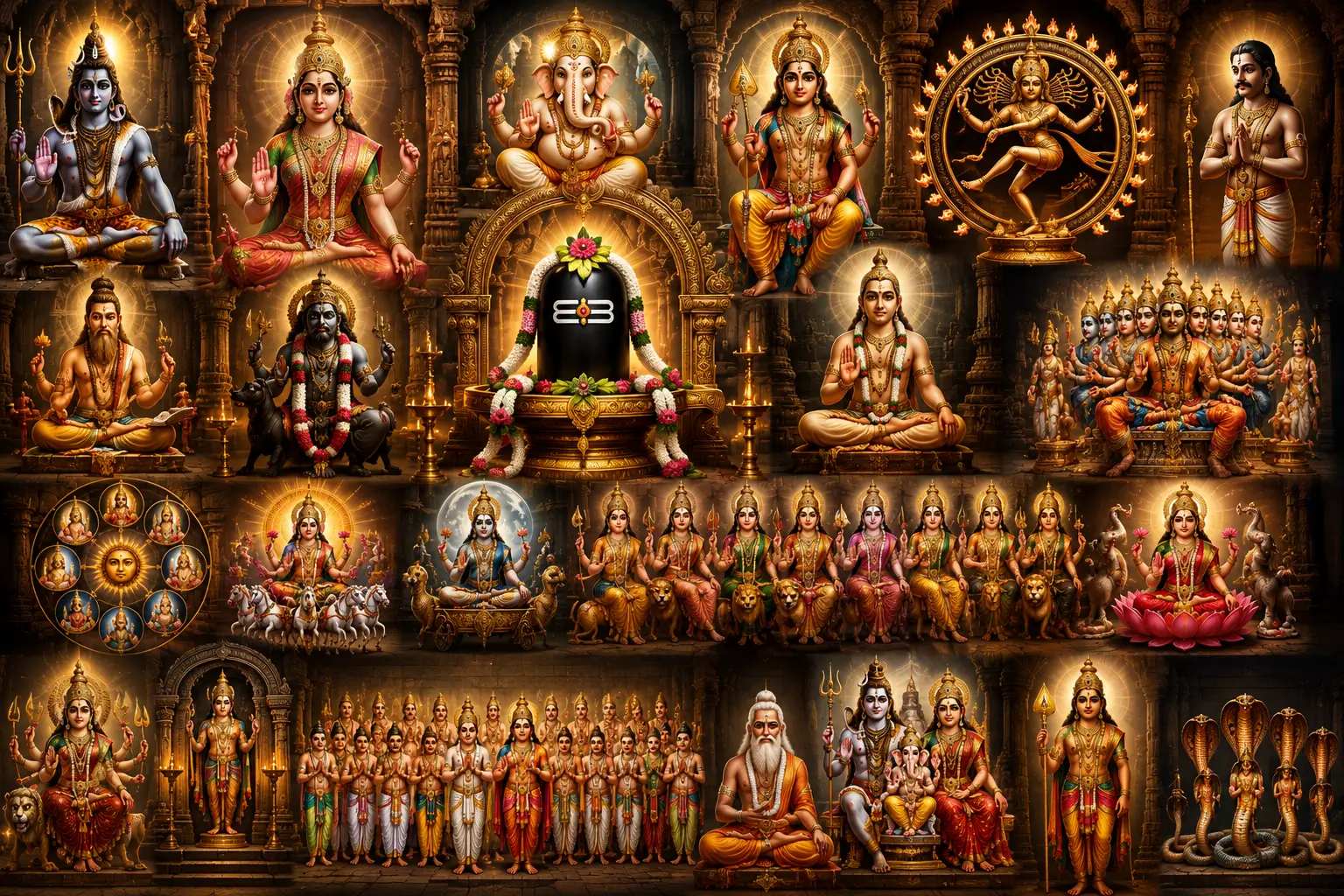
- Lord Adi Kumbeswarar
- Goddess Mangalambikai
- Kumbha Vinayagar
- Lord Murugan (Subramanya Swamy)
- Lord Nataraja
- Lord Chandikeswarar
- Dakshinamurthy
- Lord Bhairava
- Navagrahas
- Surya Bhagavan
- Chandra Bhagavan
- Sapta Matrikas
- Mahalakshmi
- Durga Devi
- Lingodbhavar
- 63 Nayanmars
- Agastya Maharishi
- Lord Somaskanda
- Dhandayuthapani
- Naga Deities
History
Sthala History ofAdi Kumbeswarar Temple
Sthala History — Adi Kumbeswarar Temple, Kumbakonam
- One of the most sacred Shiva temples in Tamil Nadu
- Associated with the cosmic origin of Kumbakonam itself
- Temple history spans over 2,000 years across multiple dynasties
- Central shrine of the world-famous Mahamaham Festival
Ancient Origin — The temple is believed to have existed since before recorded history, with its mythological roots deeply embedded in the cosmic legends of Lord Shiva.
Name of Lord — The presiding deity is Lord Adi Kumbeswarar — “Adi” meaning primordial or first, and “Kumbeswarar” derived from “Kumbha” (sacred pot) and “Eswara” (Lord Shiva).
Name of Goddess — The goddess consort is Mangalambikai — the embodiment of divine auspiciousness and grace.
Sthala Puranam — The temple’s mythological origin story is narrated in the Kumbakonam Sthala Puranam, a sacred Tamil text detailing the divine legends of this kshetram.
Classification — Adi Kumbeswarar Temple is a Paadal Petra Sthalams — one of the 276 Shiva temples glorified in the Thevaram hymns of the three principal Nayanmars.
Dynastic Heritage — Built, expanded and patronized by the Chola, Pallava, Pandya, Nayak and Maratha dynasties over many centuries.
Introduction
Adi Kumbeswarar Temple is not merely a place of worship — it is the very reason Kumbakonam exists as a city. According to sacred legend and the Kumbakonam Sthala Puranam, the town itself was born from a divine act of Lord Shiva — making this temple the spiritual heart of one of Tamil Nadu’s most revered pilgrimage destinations.
Located on the banks of the sacred Kaveri river, the temple has stood as a witness to thousands of years of Tamil civilization, royal patronage and unbroken devotion. From the great Chola emperors who built magnificent gopurams to the millions of pilgrims who gather here every twelve years for the Mahamaham festival — this temple’s history is as vast and deep as the river that flows beside it.
The Sthala Puranam — the sacred origin story of this temple — weaves together cosmic mythology, the creation of the universe and the divine presence of Lord Shiva in a narrative that has been recited, sung and revered by generations of Tamil devotees for over two millennia.
Origin Legend — The Sacred Pot
The most sacred legend associated with Adi Kumbeswarar Temple takes us back to the very beginning of creation itself — to the time of Pralaya, the great cosmic dissolution.
According to the Sthala Puranam, when the universe was engulfed in the great deluge of Pralaya and all of creation was submerged under the primordial waters, Lord Shiva — in His infinite compassion — sought to preserve the seeds of the next creation. He gathered the seeds of all living beings, all sacred knowledge and all the divine essences of creation and placed them carefully inside a sacred pot made of nectar — the Amrita Kumbha.
Lord Shiva then sent this sacred pot floating on the cosmic waters — protected by His divine grace — so that it would survive the deluge and remain intact until the waters receded and a new creation could begin.
The “Kumbha” (pot) in this legend is not merely a vessel — it is the womb of the next universe, containing the seeds of all life, knowledge and dharma. Lord Shiva’s act of preserving the Kumbha is His supreme act of grace — the promise that creation will always be renewed and that life will always return after dissolution.
As the primordial floodwaters gradually receded, the sacred Amrita Kumbha came to rest at a particular spot on the banks of the Kaveri river in what is today known as Kumbakonam. At that sacred moment, Lord Shiva Himself descended to that very spot. He took His divine bow — the Meru mountain as the bow and the serpent Vasuki as the bowstring — and shot an arrow at the pot.
The arrow struck the pot and broke it open. The sacred waters and divine seeds within the pot flowed out and merged with the earth — beginning the process of the new creation. At the very spot where Lord Shiva broke the sacred pot with His arrow and where the amrita (nectar) flowed into the earth, He took the form of the Shiva Lingam and became known as Adi Kumbeswarar — the Primordial Lord of the Sacred Pot.
The Shiva Lingam at Adi Kumbeswarar Temple is believed to be a Svayambhu Lingam — a self-manifested form of Lord Shiva that was not created by human hands but emerged spontaneously from the earth itself at this sacred spot. This makes it one of the most spiritually powerful Shiva Lingams in all of South India.
How Kumbakonam Got Its Name
The very name of the city of Kumbakonam is derived from this foundational legend.
Kumbha (கும்பம்) — meaning Sacred Pot or Vessel — refers to the Amrita Kumbha that Lord Shiva sent during Pralaya to preserve the seeds of creation.
Konam (கோணம்) — meaning Corner or the place where it rested — refers to the spot where the sacred pot came to rest after the Pralaya waters receded.
Thus Kumbakonam literally means “the place where the sacred pot rested.” The city’s very identity — its name, its geography, its spiritual significance — all flow from this one sacred act of Lord Shiva preserving and releasing the seeds of creation from the Amrita Kumbha at this spot.
The ancient Tamil name for the city was also Kudamukku — meaning “the mouth of the pot” — further emphasizing the city’s inseparable connection to the legend of the sacred pot and its contents being released into the earth at this location.
Brahma and The Pot of Creation
A complementary legend in the Sthala Puranam also speaks of Lord Brahma — the creator of the universe. According to this version, it was Lord Brahma who originally prepared the Amrita Kumbha — filling it with the seeds of all creation, the four Vedas, the essence of all living beings and the sacred waters of all holy rivers — in preparation for the next cycle of creation after the great dissolution.
Lord Brahma set this pot on the peak of Mount Meru — the cosmic mountain at the center of the universe — for safekeeping during the Pralaya. However, when the cosmic deluge unleashed its full force, even Mount Meru was submerged. The sacred pot was swept away by the primordial waters and began to drift on the surface of the cosmic ocean.
It was at this moment that Lord Shiva intervened — guiding the sacred pot with His divine will, ensuring it traveled safely across the cosmic waters and came to rest at the precise spot on the Kaveri delta that would become Kumbakonam. When the waters receded, Lord Shiva broke open the pot with His arrow — releasing the amrita into the earth and establishing Himself as Adi Kumbeswarar at that sacred spot.
This legend establishes Kumbakonam not merely as a city but as the birthplace of the current age of creation — the very spot on earth where the seeds of this universe were sown by divine will. Every molecule of this sacred land is thus believed to carry the blessing of both Lord Brahma’s creative intent and Lord Shiva’s divine grace.
Mahamaham Festival — The Origin
Directly connected to the Sthala Puranam legend of the sacred pot, the Mahamaham Festival is one of the greatest religious gatherings in the world — held once every twelve years at the Mahamaham Tank in Kumbakonam when the planet Jupiter (Guru) enters the zodiac sign of Leo (Simha Rasi).
According to the Sthala Puranam, when Lord Shiva broke open the Amrita Kumbha and the sacred nectar flowed into the earth at Kumbakonam, the waters of all sacred rivers — including the Ganga, Yamuna, Saraswati, Kaveri, Godavari, Krishna and others — converged at the Mahamaham Tank, carried by divine will.
It is said that once every twelve years, when the planets align in the configuration of Mahamaham, the sacred waters of all these holy rivers invisibly converge again at the Mahamaham Tank — making a bath in its waters equivalent to taking a holy dip in all the sacred rivers of India simultaneously.
The 16 sacred river theerthams believed to converge at Mahamaham Tank are — Ganga, Yamuna, Saraswati, Kaveri, Godavari, Krishna, Narmada, Sindhu, Tungabhadra, Payoshni, Kritamala, Kumari, Phalgu, Vetravati, Tamraparni and Shona.
The last Mahamaham festival drew over 30 lakh (3 million) pilgrims to Kumbakonam — making it one of the largest religious gatherings in India and a testament to the enduring spiritual power of this sacred kshetram.
Dynastic History
The history of Adi Kumbeswarar Temple across the major dynasties that ruled over Kumbakonam:
Sangam Age (300 BCE – 300 CE) The earliest references to Kumbakonam as a sacred town appear in Sangam-era literature. The town was already an established center of Shaivite worship during this period.
Pallava Period (4th – 9th Century CE) The Pallava kings were among the first recorded royal patrons of the temple. Several structural additions and stone inscriptions from the Pallava period have been discovered at the site, confirming royal patronage dating back to at least the 7th century CE.
Chola Period (9th – 13th Century CE) The great Imperial Chola dynasty transformed Adi Kumbeswarar Temple into the magnificent complex it is today. The towering Eastern Gopuram, the main mandapams and the temple tank were all built or significantly expanded during the Chola period. The Chola kings considered Kumbakonam a sacred capital and the Adi Kumbeswarar Temple its divine center.
Pandya Period (13th – 14th Century CE) Following the decline of the Cholas, the Pandya kings of Madurai took control of the Kaveri delta region. They continued the tradition of royal patronage — adding inscriptions, conducting festivals and endowing lands to the temple.
Vijayanagara Period (14th – 17th Century CE) Under Vijayanagara Empire rule, the temple saw significant additions including new mandapams, sculptural embellishments and the restoration of several shrines. The Nayak governors appointed by the Vijayanagara kings were especially active patrons.
Nayak Period (16th – 18th Century CE) The Thanjavur Nayaks — particularly Sevappa Nayak and Achuthappa Nayak — made major contributions to the temple’s architecture. Several of the ornate pillared halls (kalyana mandapams) and the elaborate sculptural programs visible today date to this period.
Maratha Period (18th – 19th Century CE) The Thanjavur Marathas — including kings Serfoji I and Serfoji II — were great patrons of the temple. They conducted elaborate festivals, donated valuable jewels and endowed significant lands and revenues to the temple trust.
Sthala Vriksham and Theertham
Every major Shiva temple in Tamil Nadu has a Sthala Vriksham (sacred tree) and a Sthala Theertham (sacred water body) associated with it. Adi Kumbeswarar Temple is no exception.
Sthala Vriksham (Sacred Tree) The sacred tree of Adi Kumbeswarar Temple is the Vilvam (Bilva / Bel tree — Aegle marmelos). The Bilva tree is the most sacred tree associated with Lord Shiva in all of Hindu tradition. Offering Bilva leaves to Lord Shiva is considered one of the most auspicious acts of worship — equal in merit to offering crores of other flowers. The ancient Bilva tree within the temple compound is worshipped as sacred and is believed to have stood for centuries.
Sthala Theertham (Sacred Tank) The primary sacred water body associated with Adi Kumbeswarar Temple is the legendary Mahamaham Tank — located just a short distance from the temple. This vast sacred tank is the centerpiece of the Mahamaham Festival and is believed to be the spot where the amrita from the broken Kumbha first mixed with the earth and waters of Kumbakonam.
The temple also has its own sacred tank — the Pottramarai Kulam (Golden Lotus Tank) — within the temple complex, where devotees take a ritual bath before entering for darshan.
Connection to Nayanmars and Saints
Adi Kumbeswarar Temple holds a place of supreme importance in the Shaivite Bhakti tradition as one of the Paadal Petra Sthalams — the 276 Shiva temples that were glorified through the sacred Thevaram hymns composed by the three principal Nayanmars — Thirugnana Sambandar, Thirunavukkarasar (Appar) and Sundarar.
Thirugnana Sambandar — The great child saint Sambandar is believed to have visited Kumbakonam and sung hymns in praise of Lord Adi Kumbeswarar. His Thevaram verses on this temple are among the most celebrated in all of Tamil Shaivite literature and are sung during daily rituals at the temple to this day.
Thirunavukkarasar (Appar) — The saint Appar, one of the greatest Shaivite poet-saints of the 7th century CE, also glorified Lord Kumbeswarar in his Thevaram compositions — further cementing the temple’s place as one of the most sacred Shiva kshetrams in Tamil Nadu.
Sundarar — The third of the principal Nayanmars, Sundarar, also sang of Lord Kumbeswarar — completing the trinity of Thevaram saints who blessed this sacred temple with their divine poetry.
The singing of these ancient Thevaram hymns composed by the Nayanmars forms an integral part of the daily ritual worship at Adi Kumbeswarar Temple — keeping the devotional tradition of the Bhakti movement alive in this sacred kshetram for over 1,300 years.
Puranic References
The sacredness of Kumbakonam and the Adi Kumbeswarar Temple is referenced in multiple major Puranas and sacred texts of Hindu tradition:
Skanda Purana — The Skanda Purana contains detailed references to Kumbakonam as a sacred kshetram and describes the legend of the Amrita Kumbha and Lord Shiva’s manifestation as Adi Kumbeswarar at this spot. The Kumbakonam Mahatmyam within the Skanda Purana is considered the primary textual source for the Sthala Puranam of this temple.
Brahma Purana — The Brahma Purana contains references to Kumbakonam as one of the most sacred spots on the banks of the Kaveri river — describing it as the place where the Amrita Kumbha came to rest and the seeds of creation were released into the earth.
Shiva Purana — The Shiva Purana refers to Kumbeswarar as one of the most sacred manifestations of Lord Shiva — the Lord who broke the sacred pot and established the new creation at the banks of the Kaveri.
Tevaram (7th – 8th Century CE) — The sacred Thevaram hymns of Sambandar, Appar and Sundarar are the most important devotional texts associated with this temple — glorifying Lord Kumbeswarar and establishing Kumbakonam as one of the foremost Shaivite pilgrimage centers in all of South India.
Thirumurai (Collection of Tamil Shaivite Texts) — The broader Thirumurai collection of twelve sacred Tamil texts contains multiple references to Kumbakonam and its presiding deity — confirming the temple’s status as one of the most revered Shiva kshetrams in the Tamil Shaivite tradition.
Conclusion
The Sthala History of Adi Kumbeswarar Temple is truly the story of creation itself — a narrative that begins at the dawn of the universe and flows unbroken through thousands of years of Tamil civilization, royal patronage and living devotion. From the cosmic legend of the Amrita Kumbha and Lord Shiva’s arrow to the Thevaram hymns of the Nayanmars, from the towering gopurams built by the Chola emperors to the millions who gather at Mahamaham — every layer of this temple’s history speaks of the infinite grace of Lord Adi Kumbeswarar. To visit this sacred kshetram is to step into the very heart of Tamil spirituality and touch the origin point of a living, breathing civilization of faith.
Architecture
Architecture ofAdi Kumbeswarar Temple
The Eastern Rajagopuram — Gateway to the Divine
The temple’s most iconic feature is its Eastern Rajagopuram — an 11-storey, 128-foot tower (approximately 39 metres) that serves as the principal gateway. Built primarily during the Nayak period under Govinda Dikshitar’s patronage, the gopuram is adorned with hundreds of stucco sculptures depicting scenes from Hindu mythology, celestial beings (devatas), guardian figures (dvarapalas), and divine couples. The colours — recently restored in the 2025 Kumbhabhishekam — blaze in saffron, white, and gold. A new 5-tier, 82-foot Southern Rajagopuram is under construction, with a 21-foot granite base, at an estimated cost of ₹3.5 crore.
The Three Prakaras (Sacred Enclosures)
The temple is organized around three concentric rectangular enclosures (Prakaras), oriented along the East-West axis: Pranava Prakara (innermost, housing the main sanctum), Kodumudi Prakara (middle), and Aswametha Prakara (outermost). Each precinct has its own set of shrines, mandapams, and ritual spaces. The enclosures reflect the cosmological model of Shiva’s mountain abode — each ring closer to the center representing a higher plane of consciousness.
The Navaratri Mandapam — A Single Stone Marvel
The crown jewel of the temple’s sculptural achievement is the 16-pillared Navaratni Mandapam, built during the Vijayanagara period. Its most extraordinary feature is a single large stone carved with all 27 Nakshatras (stars) and all 12 Rasis (zodiac signs) — a complete cosmological map of the heavens rendered in stone by a single sculptor. This Mandapam is used for the Navaratri festival celebrations and represents one of the most impressive feats of precision stone carving in Tamil temple history.
The Yali Corridor
Beyond the main flagstaff (Dwajastambha), a long colonnaded corridor leads from the eastern gopuram to the main sanctum. The columns of this corridor feature painted brackets in the form of Yalis — the mythological chimeric creature combining lion, elephant, and horse — a signature motif of Vijayanagara-period art. The corridor also features stone Nadaswarams (pipe instruments), a unique sculptural element found in very few temples.
The Main Sanctum (Garbhagriha)
Constructed from enduring black granite during the Chola period, the main sanctum houses the Swayambhu Shivalinga — the self-manifested sacred form of Adi Kumbeswarar. The lingam has a distinctive conical shape — wider at the base and tapering to a point at the top, resembling a needle. This unusual form is explained by the legend: when the sacred pot’s contents (amrita and sand) mixed, they formed naturally into this needle-like shape. The lingam’s surface is smooth and dark, eternally cool to the touch regardless of the season. The presiding deity is called Manthrapeeteswari Kumbeswarar — Lord of the Sacred Pedestal.
The Silver Chariots & Vahanas
The temple possesses five silver-plated chariots (Ther) — gifts of the Maratha kings of Thanjavur. Each chariot is a masterwork of silver repousse art, depicting scenes from Puranic mythology. During festivals, the processional deities (Utsavar murthis) are placed on these chariots and taken in procession through the streets. The main chariot was restored in 2025 at a cost of ₹50 lakh as part of the Kumbhabhishekam preparations.
Festivals
Festivals inAdi Kumbeswarar Temple
Adi Kumbeswarar Temple celebrates over 20 festivals annually following the traditional Tamil Panchangam calendar — an unbroken tradition of worship and celebration spanning over 2,000 years.
1. Mahamaham Festival:
Held once every 12 years in the Tamil month of Masi (February–March). Millions of pilgrims take a sacred bath in the Mahamaham Tank — believed to carry the merit of bathing in all the holy rivers of India simultaneously. The 2016 festival drew over 30 lakh pilgrims. Next festival: 2028.
2. Brahmotsavam The grandest 12-day annual festival celebrated in the Tamil month of Panguni (March–April). Highlights include daily vahana seva processions, the spectacular Silver Chariot Festival (Ther Thiruvizha) and the sacred Thirukalyanam (divine wedding of Lord Kumbeswarar and Goddess Mangalambikai).
3. Mahashivaratri Celebrated in the Tamil month of Masi (February–March). The temple conducts four special Prahar Poojas through the night — at 6:00 PM, 9:00 PM, 12:00 Midnight and 3:00 AM. Thousands of devotees maintain an all-night vigil chanting Om Namah Shivaya.
4. Panguni Uthiram Celebrated in the Tamil month of Panguni (March–April) on the Uthiram nakshatra. The sacred Thirukalyanam (divine wedding) of Lord Kumbeswarar and Goddess Mangalambikai is performed with full Vedic chanting. Most auspicious day for newly married couples to seek blessings.
5. Karthigai Deepam Celebrated in the Tamil month of Karthigai (November–December). The entire temple is illuminated with thousands of oil lamps. A special deepa aradhana is performed with a lamp bearing thousands of wicks. Every Monday of Karthigai month — Karthigai Somavaram — is observed with special worship.
6. Aadi Perukku Celebrated on the 18th day of the Tamil month Aadi (July–August). Devotees worship the sacred Kaveri river and special poojas are conducted with river water abhishekam. Women offer flowers and clay lamps on the river.
7. Navaratri Celebrated for 9 nights in the Tamil month of Purattasi (September–October). Special daily poojas and elaborate decoration of Goddess Mangalambikai in different forms. Concludes with Vijayadasami on the 10th day.
8. Skanda Sashti Celebrated for 6 days in the Tamil month of Aippasi (October–November). Special poojas at the Murugan shrine with continuous chanting of Kanda Sashti Kavacham. Concludes with the dramatic re-enactment of Soorasamharam — Lord Murugan’s victory over the demon Soorapadman.
9. Thiruvadhirai Celebrated in the Tamil month of Margazhi (December–January) on the Ardra nakshatra. Observed as the birthday of Lord Shiva. Traditional offering of Kozhukattai and Kali (rice-based sweets) made at home and offered to the Lord.
10. Pradosha Pooja Observed twice every month on the 13th day (Trayodasi) of both lunar fortnights. Special abhishekam and deepa aradhana performed during the sacred 1.5-hour Pradosha window around sunset. One of the most powerful regular rituals for removal of sins and planetary doshas.
11. Somavara Pooja Observed every Monday throughout the year. Special abhishekam and flower decoration of Lord Kumbeswarar. The Karthigai Somavaram (Mondays of Karthigai month) draws the largest Monday crowds of the year.
12. Pournami Pooja Observed on every Full Moon day. Special abhishekam and decoration of Lord Kumbeswarar. Most significant Pournami celebrations — Karthigai Pournami, Thai Pournami and Panguni Pournami.
13. Amavasya Pooja Observed on every New Moon day. Most significant for ancestral worship (Pitru Tarpana). Devotees perform Tarpana at the Mahamaham Tank or Kaveri river ghat. Donating annadanam on Amavasya is considered highly meritorious.
Festival Calendar — Quick Reference
| Month | Festival |
|---|---|
| January | Thiruvadhirai, Thai Pournami |
| February – March | Mahashivaratri, Mahamaham (every 12 years) |
| March – April | Panguni Uthiram, Brahmotsavam (12 days) |
| July – August | Aadi Perukku |
| September – October | Navaratri (9 nights), Vijayadasami |
| October – November | Skanda Sashti (6 days) |
| November – December | Karthigai Deepam, Karthigai Somavaram |
| December – January | Thiruvadhirai, Margazhi Poojas |
| Every Month | Pradosha Pooja (twice), Somavara Pooja, Pournami Pooja, Amavasya Pooja |
Temples in Kumbakonam
NearbyTemples
Temples Near Kumbakonam
- Over 188 Temples within Kumbakonam town alone
- Home to the world-famous Mahamaham Festival (once every 12 years)
- Ancient Chola, Pallava and Nayak architectural marvels
- Sacred temples dedicated to Shiva, Vishnu, Amman and Murugan
City of Temples — Kumbakonam is known as the “Temple City of Tamil Nadu” with temples dating back over 1,000 years.
Panchanada Kshetram — Situated at the confluence of five sacred rivers — Kaveri, Kollidam, Arasalaru, Vettar and Kudamuruti.
Chola Heritage — Most temples here were built or renovated during the great Chola dynasty.
Sapta Sthana Temples — Seven sacred shrines within the city considered extremely auspicious for pilgrims.
Shiva & Vishnu Balance — Rare destination where both Shaivite and Vaishnavite traditions co-exist in harmony.
Mahamaham Tank — The sacred tank where millions take a holy dip during Mahamaham.
Easy Connectivity — Well connected by rail and road from Chennai, Thanjavur, Trichy and Chidambaram.
Spiritual Tourism Hub — Major temples of the Kaveri delta region easily accessible from Kumbakonam.
Introduction
Kumbakonam, nestled on the banks of the sacred Kaveri river in Thanjavur district, Tamil Nadu, is one of the most spiritually significant towns in South India. Known as the “City of Temples,” Kumbakonam is home to more than 188 temples within the town limits alone — with dozens more located within a short distance.
The temples here span centuries of Dravidian architecture — built and patronized by the Chola, Pallava, Pandya and Nayak dynasties. Each temple tells a rich story of devotion, mythology and artistic genius through towering gopurams, intricately carved mandapams and sacred tanks.
Whether you are a devout pilgrim, a history enthusiast or a curious traveler — Kumbakonam and its surrounding temples offer a deeply enriching spiritual and cultural experience unlike anywhere else in India.
Kumbakonam — Fast Facts
- District: Thanjavur, Tamil Nadu
- 188+ Temples within town limits
- Famous for: Mahamaham Festival (every 12 years)
- Sacred River: Kaveri (Ponni)
- Nearest Airport: Tiruchirappalli (Trichy) — 95 km
- Nearest Major Railway Station: Kumbakonam Junction
- Best Time to Visit: October to March
- Language: Tamil | Entry: Free (most temples)
Major Temples in Kumbakonam
| Temple Name | Deity | Significance |
|---|---|---|
| Adi Kumbeswarar Temple | Lord Shiva | Principal temple; Mahamaham Festival center |
| Sarangapani Temple | Lord Vishnu | One of the 108 Divya Desams; tallest gopuram |
| Kasi Viswanathar Temple | Lord Shiva | Equivalent in merit to Kashi (Varanasi) |
| Chakrapani Temple | Lord Vishnu | Divya Desam; Vishnu holds the Chakra (discus) |
| Ramaswamy Temple | Lord Rama | Famous for exquisite Ramayana paintings |
| Nageswara Swamy Temple | Lord Shiva | Oldest temple; Surya rays touch the lingam |
| Someswarar Temple | Lord Shiva | Rare Chola-era sculptures |
| Mahamaham Tank | Sacred Tank | 16 theerthas merge here; crores bathe during Mahamaham |
Nearby Temples (Within 30 km)
| Distance | Temple | Location | Deity |
|---|---|---|---|
| 5 – 10 km | Airavatesvara Temple | Darasuram | Lord Shiva (UNESCO Heritage) |
| Swamimalai Murugan Temple | Swamimalai | Lord Murugan — Arupadai Veedu | |
| Uppiliapan Temple | Thirunageswaram | Lord Vishnu — 108 Divya Desam | |
| Rahu Temple | Thirunageswaram | Famous Rahu dosha remedy temple | |
| 10 – 20 km | Brihadeeswarar Temple | Thanjavur | Lord Shiva — UNESCO World Heritage |
| Gangaikonda Cholapuram | Gangaikonda Cholapuram | Lord Shiva — UNESCO World Heritage | |
| Papanasam Shiva Temple | Papanasam | Lord Shiva; sacred Kaveri ghat | |
| Patteeswaram Durga Temple | Patteeswaram | Goddess Durga (Gnanambika) | |
| 20 – 30 km | Brahmapureeswarar Temple | Sirkazhi | Lord Shiva; birthplace of Sambandar |
| Vedaranyeswarar Temple | Vedaranyam | Lord Shiva; Paadal Petra Sthalams | |
| Mayuranathar Temple | Mayiladuthurai | Lord Shiva; Parvati as Peacock |
Festivals & Significance
| Festival | When | Significance |
|---|---|---|
| Mahamaham Festival | Every 12 Years | Crores take a sacred bath; equivalent to all holy rivers |
| Karthigai Deepam | Nov – Dec | Festival of lights; thousands of lamps lit across temples |
| Brahmotsavam | Annual (temple-specific) | Grand 10-day chariot festival with processions |
| Mahashivaratri | Feb – Mar | Night-long worship; special abhishekams at all Shiva temples |
| Panguni Uthiram | Mar – Apr | Sacred celestial wedding day; huge processions |
Pooja Timings
| Pooja | Timing |
|---|---|
| Thiruvanandal (Dawn) | 5:30 AM |
| Kalasandhi | 8:00 AM |
| Uchikalam (Noon) | 12:00 PM |
| Pooja | Timing |
|---|---|
| Sayarakshai (Evening) | 6:00 PM |
| Irandaam Kalam | 7:30 PM |
| Ardhajama Pooja | 9:00 PM |
* Timings may vary by temple. Verify locally before visiting.
How to Reach Kumbakonam
By Train
Kumbakonam Junction is well connected to Chennai (4.5 hrs), Thanjavur (30 min) and Trichy (1.5 hrs). Multiple express trains run daily.
By Road
State buses and private coaches from Chennai (315 km), Trichy (95 km), Thanjavur (40 km) and Chidambaram (80 km).
By Air
Nearest airport: Tiruchirappalli International Airport (IXR) — approx. 95 km / 2 hrs by road.
Local Transport
Auto-rickshaws, cycle rickshaws and share autos available within town. Taxis for nearby temples.
Travel Tips
| Tip | Details |
|---|---|
| Best Time to Visit | October to March (cool weather; major festivals) |
| Dress Code | Traditional attire preferred; remove footwear at entrance |
| Photography | Not permitted inside sanctum sanctorum |
| Temple Timings | 6 AM – 12 PM and 4 PM – 9 PM (most temples) |
| Entry Fee | Free for most temples; special darshan tickets available |
| Stay Options | Hotels, lodges and dharamshalas near all major temples |
Conclusion
Kumbakonam is truly the crown jewel of Tamil Nadu’s temple heritage. With over 188 temples within its limits and world-class heritage sites like Darasuram, Swamimalai and Brihadeeswarar within easy reach, it offers an unmatched spiritual journey through centuries of Chola glory and Dravidian devotion. Plan your visit, explore the divine, and let Kumbakonam transform your soul.
Routes
Routes inKumbakonam
Bookings
Bookings
Map
Map
PremiumExperiences
Multi-Cuisine Restaurant
Your content goes here. Edit or remove this text inline or in the module Content settings. You can also style every aspect of this content in the module Design settings and even apply custom CSS to this text in the module Advanced settings.

Spa & Wellness
Your content goes here. Edit or remove this text inline or in the module Content settings. You can also style every aspect of this content in the module Design settings and even apply custom CSS to this text in the module Advanced settings.
Large Pool Area
Your content goes here. Edit or remove this text inline or in the module Content settings. You can also style every aspect of this content in the module Design settings and even apply custom CSS to this text in the module Advanced settings.

Adventure Sports for All Ages
Your content goes here. Edit or remove this text inline or in the module Content settings. You can also style every aspect of this content in the module Design settings and even apply custom CSS to this text in the module Advanced settings.

Indoor Fitness Center
Your content goes here. Edit or remove this text inline or in the module Content settings. You can also style every aspect of this content in the module Design settings and even apply custom CSS to this text in the module Advanced settings.
Service Network
Our PrestigiousLandmarks
Dubai High Tower
Tropical Paradise Maldives

Hong Kong Retreat

Testimonials
Experiences Shared byOur Customers
Your content goes here. Edit or remove this text inline or in the module Content settings. You can also style every aspect of this content in the module Design settings and even apply custom CSS to this text in the module Advanced settings.
Our Blog
Plan Your Next Getawaywith Our Travel Blog